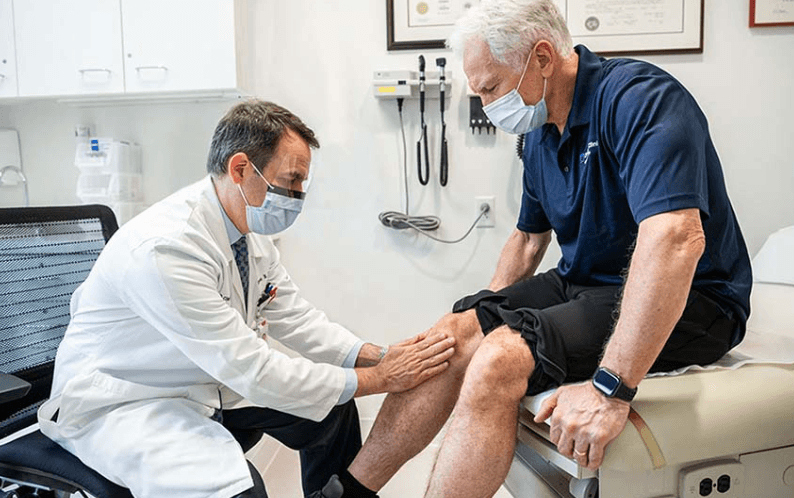
Approximately 25 percent of adults experience knee pain that limits their function and mobility. This discomfort often starts as a minor ache that people try to ignore or treat with rest. However, when pain persists for more than three months, it enters the chronic stage. At this point, the issue is rarely about the joint itself and more about how the body moves as a whole. To stop the cycle of discomfort and prevent further damage, it is essential to consult Motion RX experts for a specialized evaluation. Motion RX Health focuses on performance-driven recovery to help you return to an active lifestyle.
Chronic pain is not just a physical sensation; it is a signal that your body has run out of ways to compensate for a movement problem. Many people spend months or even years trying to fix their knees with ice packs and over-the-counter pills. While these might provide temporary relief, they do not address why the pain started in the first place. Motion RX Health uses a root-cause assessment to find the biomechanical issues that keep you in pain. By focusing on personalized care and movement optimization, patients can see measurable progress that lasts long-term.
Key Takeaways for Knee Health
- Understanding when to seek help can save you from unnecessary suffering and expensive medical procedures. Here are the primary insights regarding chronic knee pain management:
- Chronic pain is defined as any discomfort lasting longer than three months and requires specialized attention.
- If the R.I.C.E method (Rest, Ice, Compression, Elevation) no longer provides relief, your injury has likely progressed beyond simple inflammation.
- Changes in your gait or walking pattern are signs that your body is compensating, which can lead to hip and ankle issues.
- Motion RX Health offers one-on-one care that focuses on biomechanical analysis rather than just treating the painful spot.
Defining Chronic Pain vs Acute Injury
It is important to know the difference between a new injury and a chronic condition. An acute injury happens suddenly, like a fall or a twist during a soccer game. You usually feel sharp pain immediately, and there is often swelling or bruising. These injuries often heal with basic care and time. Chronic pain is different. It is a dull, persistent ache that seems to linger no matter what you do. It might feel better one day and worse the next, but it never truly goes away.
Degenerative changes often play a role in chronic pain. This means the structures in your knee are wearing down over time. If you wait too long to address this, your body starts to move differently to protect the knee. This is called compensation. For example, you might start putting more weight on your other leg. Eventually, this leads to pain in your hips, lower back, or ankles. Movement assessment experts at Motion RX Health look at these patterns to stop the chain reaction of pain.
When Home Remedies Fail
Most people start their recovery journey with the R.I.C.E. method. This is great for the first 48 to 72 hours after an injury. However, if you are still icing your knee every night three months later, the method is failing you. Rest is often the worst thing for chronic pain because it leads to muscle weakness and stiff joints. Your knee needs controlled, specific movement to heal correctly. When home remedies stop working, it is a clear sign that you need personalized rehabilitation services.
The Danger of Medication Reliance
Taking Ibuprofen or Naproxen every day is a common trap. These drugs mask the pain, which makes you feel like you can keep going. The problem is that the underlying issue is still there. You might be walking on a knee that is structurally unstable, but because the medication numbs the pain, you keep causing more damage. Sports injury specialists often see patients who have significantly worn down their cartilage because they used pills to push through the pain. Shifting focus from masking symptoms to fixing the root cause is the only way to achieve pain-free movement.
Addressing the Biomechanical Root Cause
Knee pain is frequently a symptom of a problem elsewhere. If your feet are flat or your hips are weak, your knee has to take on extra stress. No amount of ice will fix a weak hip. Motion RX Health therapists perform a biomechanical analysis to see how your whole body works together. We look at how you squat, how you walk, and how you balance. This clarity allows us to create a plan that targets the actual source of the problem, ensuring long-term wellness.
Functional Limits in Daily Life
You should not have to plan your day around your knee pain. If you find yourself avoiding the stairs or parking closer to the store to avoid walking, your quality of life is being affected. These functional limitations are major red flags. Healthy joints should allow you to move through the world without constant thought or worry. When your knee starts to dictate what you can and cannot do, it is time for a professional physical therapy consultation.
Changes in Gait and Balance
Have you noticed that you have a slight limp? Or perhaps you find yourself holding onto the railing more often when going down stairs? These are changes in your gait, or your walking pattern. A change in gait is your brain’s way of trying to protect you from pain. However, this new way of walking is usually less efficient and puts more stress on other joints. Our movement assessment experts can identify these subtle shifts and help you return to a natural, efficient walking pattern.
Sleep Disturbance and Morning Stiffness
Pain that wakes you up at night or makes it hard to get out of bed in the morning is a sign of high irritability in the joint. Chronic inflammation can cause the joint fluid to thicken overnight, leading to that “stiff” feeling. If you have to “warm up” your knees just to walk to the kitchen for coffee, your joints are struggling. Specialized care can help reduce this inflammation and improve the lubrication of the joint through specific mobility exercises.
Mechanical Instability and Audible Symptoms
Sometimes you can hear knee problems before you feel them. While occasional popping is normal, consistent grinding or clicking sounds (known as crepitus) combined with pain should not be ignored. These sounds often mean that the kneecap is not tracking correctly or that there is a flap of tissue getting caught in the joint. Motion RX Health provides the expertise needed to determine if these sounds are harmless or a sign of something more serious.
The Sensation of Giving Out
Feeling like your knee is going to “give out” or buckle is a sign of mechanical instability. This can be very scary and often leads to a fear of falling. This sensation usually happens because the muscles around the knee are not firing correctly or a ligament is loose. Performance-driven physical therapy focuses on strengthening these stabilizer muscles to give you back your confidence. We want you to feel rock-solid on your feet, whether you are on a hiking trail or walking through a grocery store.
Joint Locking and Extension Issues
If your knee occasionally “locks” in place, preventing you from fully straightening or bending it, you may have a mechanical blockage. This could be a small piece of cartilage or a meniscus tear. This is a situation where you definitely need to see injury prevention experts. Forcing a locked knee to move can cause significant damage. A professional can use manual therapy and specific movements to help clear the joint and restore your full range of motion.
Stopping the Activities You Love
The biggest cost of chronic knee pain is the loss of your active lifestyle. Many people simply stop running, playing tennis, or even gardening because they are afraid of the pain that follows. This withdrawal leads to a cycle of weakness and further pain. It also takes a toll on your mental health. Being active is a part of who you are, and losing that can be devastating. Motion RX Health is dedicated to helping you get back to those hobbies safely and stronger than before.
| Condition Stage | Typical Symptoms | Motion RX Focus | Recovery Goal | Long-Term Impact |
| Early Chronic | Dull ache, stiffness after rest | Movement Assessment | Restore Mobility | Prevent progression |
| Functional Limit | Pain on stairs, limping | Gait Analysis | Normal Function | Protect other joints |
| Mechanical Issue | Popping, locking, giving out | Stability Training | Joint Integrity | Avoid surgery |
| Activity Loss | Avoiding sports or hobbies | Performance Loading | Return to Sport | Active lifestyle |
| Advanced Wear | Constant pain, bone-on-bone | Strength Preservation | Pain Management | Delayed intervention |
Why Motion RX Health Is Different
Most traditional physical therapy clinics use a “one-size-fits-all” approach. You might be in a room with five other people while a technician shows you basic exercises. Motion RX Health is different because we provide one-on-one care with an expert therapist. We don’t just look at the knee; we look at the human. Our movement optimization strategy means we find the weakest link in your movement chain and fix it. This performance-driven approach is why so many athletes and active adults trust us with their recovery.
Expert Insight: The Law of Regional Interdependence
In the world of performance science, we follow a concept called regional interdependence. This means that a problem in one part of the body often shows up as pain in another part. The knee is a “slave” to the hip and the ankle. The knee is primarily a hinge joint; it wants to go forward and backward. If your hip cannot rotate properly or your ankle is stiff, the knee is forced to rotate to make up for it. This twisting motion causes the meniscus and cartilage to wear out prematurely. By improving hip mobility and ankle stability, we can take the unnecessary stress off the knee. This is why a root-cause assessment is more effective than just putting a heating pad on the joint. We fix the mechanics to save the joint.
See also: Weed and Feed Insights 612-404-2539 for Tracking
The High Cost of Delaying Professional Help
Ignoring chronic knee pain doesn’t make it go away; it just makes it more expensive to fix later. When you wait, you risk permanent cartilage loss. Cartilage does not have a blood supply, so once it is gone, it is very hard to grow back. Early intervention with Motion RX Health can help preserve the joint you have. Furthermore, delaying care often leads to the need for total knee replacements. By investing in physical therapy now, you can avoid the high costs, long recovery times, and risks associated with major surgery.
Recap of Knee Pain Warning Signs
Seeking help early is the best way to ensure a long life of pain-free movement. If you have been experiencing knee pain for more than three months, if you are relying on pain medication to get through the day, or if you have stopped doing the things you love, the time to act is now. Motion RX Health is here to provide the clarity and personalized plan you need to move forward. Don’t wait for the pain to become unbearable. Take a proactive step toward your health and performance today.
FAQs About Consult Motion RX Experts
How long does a typical physical therapy session last?
At Motion RX Health, we value one-on-one care. Most sessions last about 60 minutes, during which you work directly with an expert therapist. This ensures that every movement you make is done with the correct form and that your plan is adjusted in real-time based on your progress.
Do I need a doctor’s referral to see a specialist?
In many cases, you can start your journey toward recovery without a formal referral. Florida allows for direct access to physical therapy, meaning you can consult Motion RX experts immediately when you notice persistent pain. This allows for faster intervention and quicker results.
What should I wear to my first appointment?
You should wear comfortable athletic clothing that allows you to move freely. Since we perform a comprehensive movement assessment, we need to see how your knees, hips, and ankles move. Gym shorts and a t-shirt along with supportive sneakers are usually the best choice.
How soon will I see measurable progress?
While every patient is different, many people feel a decrease in pain and an increase in mobility within the first few sessions. Our goal is to provide you with clear milestones so you can see your strength and function improving every week. We focus on long-term wellness, not just a quick fix.
Is physical therapy only for athletes?
No, our personalized rehabilitation services are for anyone who wants to live an active life. Whether you want to return to competitive sports or simply want to walk your dog without pain, our experts tailor the treatment to your specific goals and lifestyle needs.