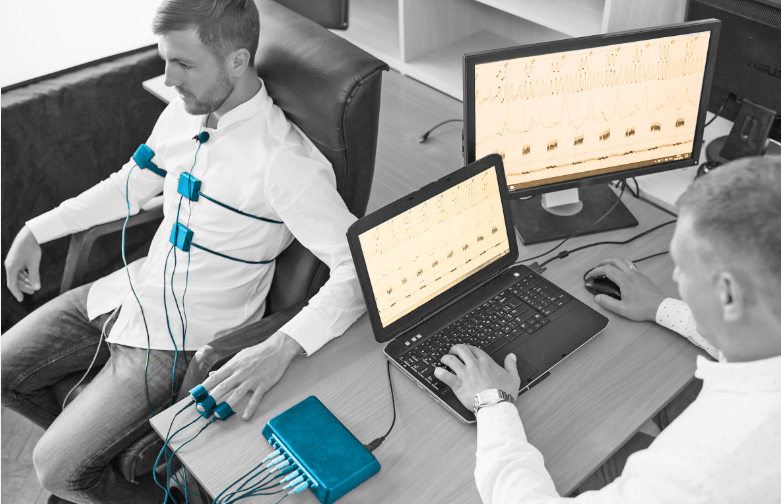
You’ve probably seen a polygraph test in a crime drama, right? The suspect is sweating bullets while a detective asks questions, the needle jumps around, and somehow the truth is revealed. It’s dramatic, it’s tense, and it makes for great TV. But real life? Not so much. The truth is, a polygraph test is a lot more nuanced, a little unnerving, and not nearly as magical as Hollywood makes it seem.
I remember the first time I saw one in action—an actual, live polygraph test. A friend of mine had applied for a sensitive job that required it. He came out looking pale, muttering something about the machine “reading his soul.” And honestly, that’s kind of what it feels like. The machine doesn’t lie; it just watches your body for signs of stress, and humans aren’t exactly perfect at hiding those.
What a Polygraph Test Actually Measures
Here’s the thing about polygraphs test : they don’t detect lies. That’s a common misconception. The device measures physical reactions—heart rate, blood pressure, breathing, and skin conductivity. Basically, it’s watching how your body reacts when you answer questions. If your body spikes in stress at a certain question, the examiner takes note.
Think about it. If someone asks, “Did you take the missing money?” and your blood pressure jumps, the machine flags that response. But maybe you just have anxiety or a fear of authority. That’s the tricky part: the polygraph is not a mind reader, it’s a stress detector.
There’s an example from my friend’s test that still makes me chuckle. He was asked a question about minor policy violations at work. His stress spiked, the machine recorded a “significant response,” and the examiner raised an eyebrow. He was nervous because he had accidentally taken a stapler home once—not exactly high treason, but the polygraph didn’t care. It just logged the spike.
The Human Factor
Polygraphs aren’t just about machines. The examiner plays a huge role. A skilled examiner can make you comfortable—or uncomfortable—depending on the goal. They notice subtle cues: fidgeting, hesitation, voice changes. That’s why preparation isn’t about tricking the machine—it’s about understanding the process and staying as calm as possible.
I’ve sat through a pre-test briefing, and it felt more like a conversation than anything else. The examiner explained what would happen, what types of questions were normal, and how to breathe. They even joked about the machine being “picky about honesty,” which lightened the tension. It’s human psychology in action. The polygraph is just part of it; the examiner reads your body language too.
How the Test Usually Flows
Most people imagine polygraph tests as sitting in a lab, wires everywhere, lights flashing. Reality? A bit less cinematic. You’ll usually start with a pre-test interview. This is where the examiner learns about your background and explains the questions they’ll ask. Then comes the baseline measurement—simple questions like your name, birthday, or random facts. The idea is to see how your body reacts when you’re telling the truth.
Then the “real” questions start. They can be direct, like “Did you lie about your work experience?” or broader, like “Have you ever been untruthful in your personal life?” The examiner watches for spikes and patterns. It’s not instantaneous. You won’t see the needle go up and suddenly scream “LIAR!” It’s more like a story your body tells in tiny movements and beats.
Afterward, there’s a review session. The examiner goes over the results with you. In some cases, you might get follow-up tests if something is unclear. Here’s a little insider secret: most people are surprised by how much anxiety itself can skew results. If you’re nervous about the test, your body reacts—even if you’re being honest.
Can You “Beat” a Polygraph?
Let’s be honest—this is the million-dollar question. Can you outsmart a polygraph? Short answer: not really. People try all sorts of tricks, from controlled breathing to mental distractions, but polygraph examiners are trained to spot them.
I’ve talked to a few people who swore they could “trick the machine,” only to come out looking more nervous than when they went in. One guy even practiced biting his tongue every time he told a lie—he thought it would mask physiological responses. Spoiler: it didn’t. In fact, it made him flinch more and added to the stress signals.
The real takeaway is that preparation is less about deception and more about managing natural reactions. Staying calm, listening to instructions, and treating the test like a structured conversation usually goes a long way. Your body will be honest whether your mind is trying to game the system or not.
The Accuracy Debate
Accuracy is where polygraphs get a bad rap. Studies put accuracy anywhere from 60% to 90%, depending on the examiner, the test type, and the circumstances. That’s a huge range.
Think about that in practical terms. Even if a test shows “deception,” it could be a false positive. And even if it shows honesty, it could miss subtle stress signals. That’s why polygraph results alone aren’t usually used as legal proof—they’re more like a tool in the investigative toolbox.
Here’s a scenario that makes the limits clear. A bank hires someone and runs a polygraph as part of a security clearance. The test flags the new hire for a supposed theft, but in reality, the person just has an anxiety disorder that makes them react strongly under stress. Without context, the polygraph could create unnecessary trouble.
When Polygraphs Are Used
Despite the controversy, polygraphs are still used in many fields. Law enforcement, intelligence agencies, security-sensitive jobs, and some private investigations rely on them. In these cases, it’s less about catching lies and more about understanding reactions under scrutiny.
For example, federal agencies often use polygraphs for pre-employment screenings. It’s less about determining absolute truth and more about getting a sense of a candidate’s reliability and comfort level with sensitive information. For private companies, polygraphs can sometimes be used to investigate internal theft or misconduct, though their use is much more restricted in the private sector due to legal and ethical concerns.
Psychological Impact
Here’s something not often discussed: the stress of the polygraph itself can have a psychological impact. Even knowing that your heart rate and sweat levels are being monitored can make you hyper-aware of your own reactions. Some people walk out of a test feeling like they just ran a marathon mentally.
I saw it firsthand with my friend. After his test, he needed a walk outside just to shake off the tension. Even though nothing nefarious was going on, the feeling of being monitored that closely triggered a fight-or-flight response. That’s worth keeping in mind if you ever face one yourself. The machine doesn’t lie, but your nerves can sometimes tell their own story.
The Human Side of a Polygraph
If you step back, polygraphs are a fascinating intersection of technology and human psychology. They show how our bodies betray our thoughts, even when we try to hide them. And they remind us that honesty isn’t just moral—it’s physiological.
But let’s not romanticize it too much. The polygraph is far from infallible, and the experience can be uncomfortable. Approaching it with curiosity, rather than fear, usually makes it less intimidating. If you know someone who’s going through a polygraph, don’t offer “tricks” to beat it—just remind them to breathe, stay calm, and treat it like any high-stakes conversation.
Takeaways
Polygraphs are part science, part art, and all human observation. They don’t read minds—they read bodies. Accuracy varies, results are open to interpretation, and nerves matter more than most people realize. But they’re also a window into how our physiological responses connect with truth and stress, and they’re surprisingly revealing, even in subtle ways.
Next time you see a polygraph on TV, remember: the drama is real, but the magic needle isn’t. The real story is in the tiny, human signals we give off under pressure. And honestly, that’s way more interesting than Hollywood ever makes it seem.